Hospice Care

How Hospice Supports Veterans

December 1, 2025

How Hospice Supports Veterans

How Hospice Supports Veterans: Honoring Service Through Compassionate Care:

At Brightmoor Hospice, we believe every patient deserves care that respects their life story—and for veterans, that story often includes experiences, sacrifices, and memories that require specialized understanding. As a proud Level 4 partner in the National Hospice and Palliative Care Organization’s “We Honor Veterans” program, Brightmoor Hospice is committed to helping veterans find comfort, dignity, and peace at the end of life. 

Veterans often face unique physical, emotional, and spiritual challenges as they age. Trauma, combat experience, service-related injuries, and long-held memories can surface during the end-of-life journey. Through the We Honor Veterans program and our specialized team, Brightmoor Hospice walks alongside our veteran patients and their families with respect, gratitude, and tailored support.

Understanding the Unique Needs of Veterans

The We Honor Veterans program—created in collaboration with the Veterans Administration, Hospice-Veteran Partnerships, and VA facilities—helps hospices recognize and respond to the specific needs of America’s veterans and their families. At Brightmoor Hospice, our staff and volunteers receive focused training that equips them to listen compassionately, ask thoughtful questions, and guide veterans through their life stories in a way that promotes healing and peace. 

How Brightmoor Hospice Supports Veterans

Brightmoor Hospice’s Veteran Program offers a wide range of services designed to honor and support those who have served our country. 

⭐ Military History Checklist:

We gently guide veteran patients and families through a military history review. This helps us understand their experiences and identify needs such as: Locating or obtaining military discharge papers, assisting with arrangements for burial in a national cemetery, clarifying available veteran benefits.

⭐ Military Recognition Ceremonies:

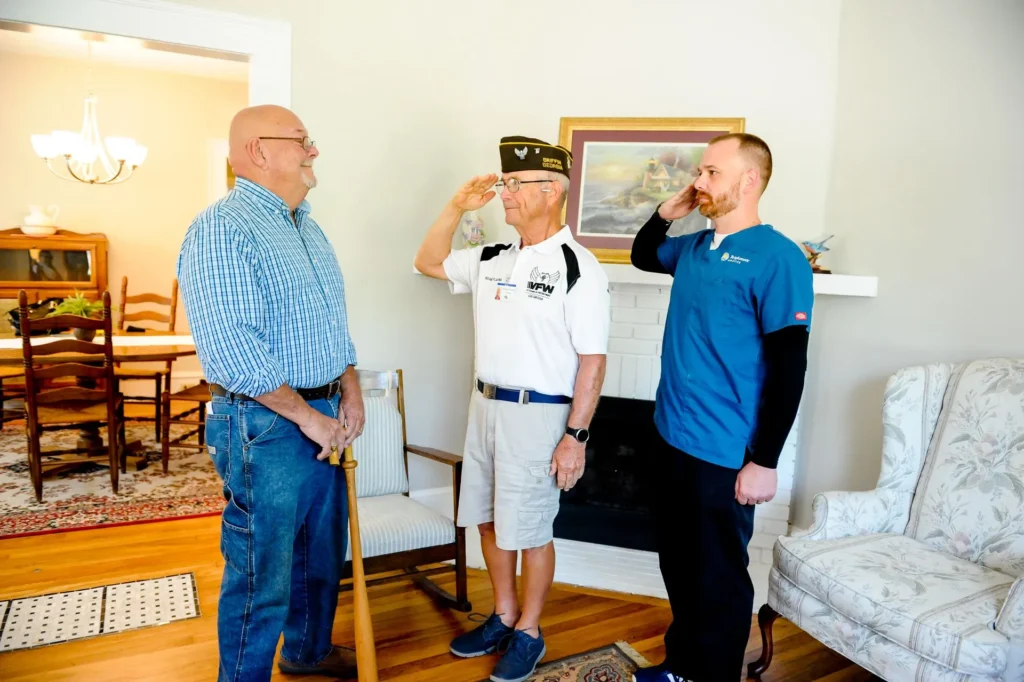
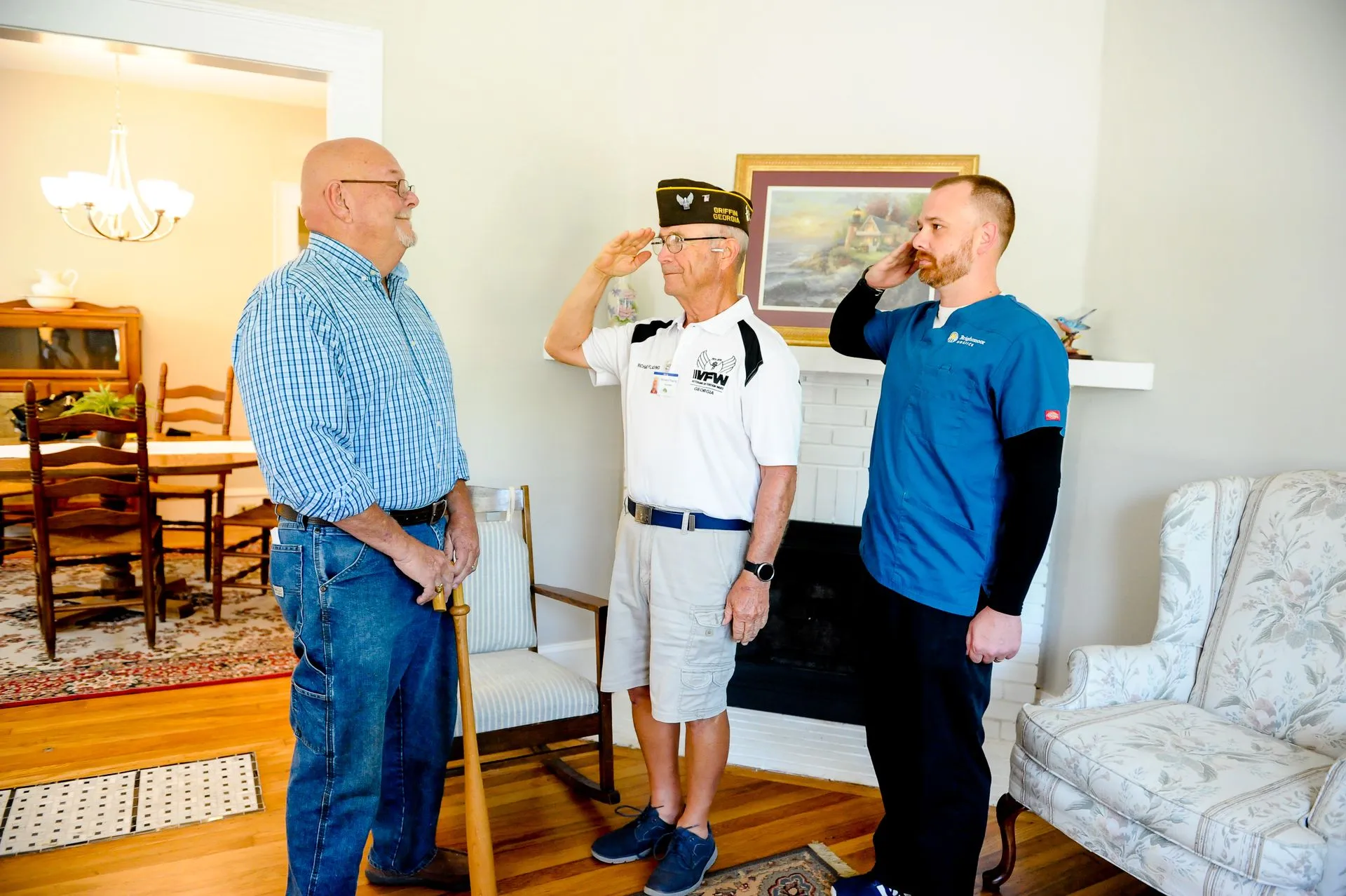
Our team is honored to provide Military Recognition Ceremonies, which include a commemorative book and a certificate presented to the veteran and their family. These ceremonies offer a moment of reflection, gratitude, and dignity—often becoming cherished memories for loved ones. 

⭐ Veteran-to-Veteran Volunteer Program:

Veterans often find comfort in speaking with someone who has shared similar experiences.

Brightmoor Hospice recruits veteran volunteers who visit veteran patients, engage in conversation, and provide companionship grounded in mutual understanding.

Our volunteers also support veteran-focused events at partnering senior facilities.  These gatherings help build community and honor the shared experiences of local veterans. Whether through a recognition ceremony, a meaningful conversation with a fellow veteran, or assistance navigating VA resources, we strive to ensure our veteran patients feel valued and supported every step of the way.

We Are Honored to Serve Those Who Served.  If you or a loved one is a veteran facing a serious illness, Brightmoor Hospice is here to help. Our specialized team is ready to walk with you through this important chapter—with compassion, expertise, and heartfelt gratitude.
📞 (770) 467-9930

KEEP READING

More articles you may find helpful.

HERE TO HELP

Have questions about your care options?

Whether you’re exploring nursing care, rehabilitation, hospice, or senior living, the Brightmoor team is here to help you find the information you need.

UNDERSTANDING HOSPICE ELIGIBILITY

Hospice support for different illnesses.

Learn how different illnesses may affect care needs and when hospice support may be appropriate.

Who qualifies for hospice care?

Hospice may be appropriate for individuals with a life-limiting illness and a life expectancy of six months or less if the illness follows its expected course. Eligibility is determined through a clinical evaluation.

Select a condition below to learn more.

As ALS progresses, breathing, swallowing, and moving may become more difficult. Hospice can help manage discomfort and support patients and families as care needs increase.

In the advanced stages of dementia, your loved one may need help with nearly every part of daily life. Difficulty communicating, trouble swallowing, weight loss, and repeated infections may be reasons to ask about hospice.

When cancer advances and treatment is no longer helping, or a person chooses to focus on comfort, hospice may offer an added layer of support. Care focuses on managing pain and other symptoms while supporting emotional and practical needs.

When breathing becomes difficult even while resting or doing simple activities, daily life can feel overwhelming. Hospice can help ease symptoms and provide reassurance for patients and caregivers.

Advanced heart disease can cause shortness of breath, swelling, weakness, and discomfort that make everyday activities harder. Hospice offers support when symptoms persist and care needs continue to grow.

For someone living with advanced HIV or AIDS, repeated infections, weight loss, and increasing weakness may lead to greater care needs. Hospice focuses on comfort and compassionate support for the person and those who care for them.

When kidney disease becomes advanced, patients and families may face difficult decisions about dialysis and ongoing care. Hospice may be an option for those who choose not to begin dialysis or decide to stop, depending on their overall health and needs.

Advanced liver disease may cause fluid buildup, confusion, discomfort, and repeated hospital stays. Hospice can help manage symptoms and support families as the illness progresses.

Conditions such as Parkinson’s disease, multiple sclerosis, or the lasting effects of a severe stroke can affect movement, communication, and swallowing. Hospice may be appropriate when these changes become severe and a person’s overall health continues to decline.

After a severe infection such as sepsis, a person already living with an advanced illness may struggle to recover. When health continues to decline, hospice may help provide comfort and support through the next stage of care.

Having one of these conditions does not automatically qualify someone for hospice. Eligibility is based on each person’s individual health and care needs.

Have questions about hospice eligibility? Our team is here to help you understand your options.